
Blonde Hair Colorist Near Me: Finding Your Perfect Match
Last Updated: November 1, 2026
Quick Summary
Finding a blonde hair colorist near me starts with three things: a portfolio of real blonde work, reviews that mention consistency, and a clear specialty in blonding rather than general color. Book a consultation to get a realistic session count and maintenance plan before any color touches your hair.
Bring three to five daylight reference photos on hair similar to yours in texture and starting color.
Ask the colorist to write down the formula, developer volume, and timing for every future appointment.
A gloss or toner refresh is typically needed every four to eight weeks, depending on fade and washing.
Trim every eight to twelve weeks, since split ends spread upward and cost more to fix later.
Never lighten roots at home with box bleach, which is a common cause of breakage.
Table of Contents
What to Look for in a Blonde Hair Colorist Near Me
Finding a blonde hair colorist near me starts with three things: a portfolio of real blonde work, reviews that mention consistency, and a clear specialty in blonding rather than general color.
Blonde is the least forgiving color in the salon: over-lift leaves hair brittle and yellow, and a toner mixed too cool turns fine hair ashy gray.
Guests who ask better questions before booking tend to get better blonde. Below: how to choose, what a consultation should cover, and how to keep color fresh between visits.
Portfolios, Reviews, and Specialty Signals That Matter
A blonde specialist is a colorist whose training and portfolio center on lifting, toning, and dimensional work, not a generalist who takes blonde appointments occasionally.
Start with the portfolio: before-and-after photos shot in the same lighting, on hair similar to yours in texture and starting color.
Watch out: a beautiful feed with no before photos is a red flag. You cannot judge color work without seeing where the hair started.
When you are ready to see what a salon actually offers, review the full service menu to confirm blonding and dimensional color are core services, not add-ons. Before-and-after work from real clients is the fastest way to judge a team's range, so spend time with the team gallery before you book.
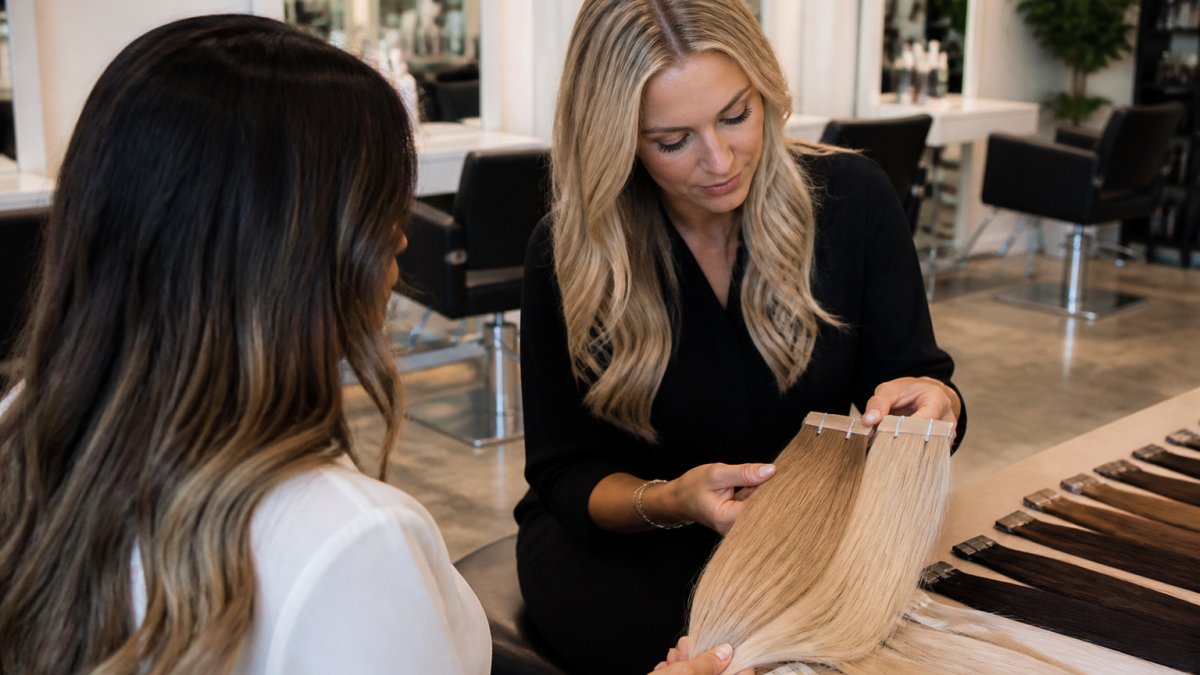
Your Blonde Hair Consultation: Questions to Ask Before the Chair
A blonde hair consultation is a short appointment, usually free or low-cost, where the colorist assesses your hair's history and maps a realistic plan before any color touches your hair.

What to Bring and How to Prepare
Come with more than a vague idea of "blonde." The consultation goes faster and produces a better plan when you bring:
Three to five reference photos of blonde you love, shot in daylight, on hair similar to yours in texture and starting color
One or two photos of blonde you do not want, often more useful than the ones you like
Your color history for the past 12 to 24 months: box dye, salon color, bleach, henna, keratin treatments, and any at-home lightening
Guests often arrive with a platinum inspiration photo and a history of dark box dye. The colorist needs both to tell you honestly whether that goal is two sessions or six.
How to Describe the Shade You Want
"Blonde" covers everything from icy platinum to warm honey. Use concrete language instead of brand names or vague terms:
Level: how light you want to go on a scale of 1 (black) to 10 (lightest blonde), the scale most colorists use daily.
Temperature: cool, neutral, or warm, shown in daylight photos, not filtered light.
Dimension: flat, single-process color versus highlights, balayage, or a shadow root.
If you cannot name the level, point to the photos and say what you like about each one. A good colorist will translate that into a formula.
Questions to Ask Before the Chair
Ask these directly, and listen for specific answers rather than reassurance:
How many sessions will my goal take, honestly, and how can I get a quote for each session?
What is my hair's current condition, and will lifting damage it?
Will you do a strand test before the appointment, and what will it tell us?
The answers tell you more than any Instagram grid. A colorist who says "three sessions" when you wanted one is being honest, not difficult; one who promises platinum in one sitting on previously colored dark hair is telling you something too.
Pro Tip Ask the colorist to write down the formula, developer volume, and timing used on your hair. Bring that note to every future appointment, even at a different salon. It is the single most useful piece of information for keeping blonde consistent.
What a Good Consultation Outcome Looks Like
You should leave the consultation with a realistic session count, a maintenance schedule, and a clear answer about what your hair can and cannot handle today. If you leave with only a vibe and a booking link, ask for the specifics before you commit.
Balayage for Blonde Hair and Dimensional Blonding Options
Balayage for blonde hair is a freehand painting technique that creates soft, graduated lightness without the stripy look of traditional foils.
It is not the only route to blonde. The right choice depends on your base color and how often you want to sit in the chair:
Foil highlights: maximum lift, ideal for platinum and bright blonde
Babylights: fine, dense foils for a natural, sunlit effect
Balayage and foilayage: painted dimension with a softer grow-out
Dimensional blonding works because contrast reads as depth. One flat tone looks like a color job; three blended tones look like your hair.
If you want a sense of where color trends are heading, our stylists share their take on natural-looking fall color and why soft dimension is replacing high-contrast blonde.
Blonde Hair Color Correction: When Your Color Needs a Reset
Blonde hair color correction is the process of fixing unwanted brass, banding, uneven lift, or damage from a previous color service.
Correction is slower and more technical than a standard appointment: multiple sessions, gentler lighteners, and a toner plan. Expect a colorist to test-strand your hair first and explain the risks plainly.
The most common mistake is rushing correction in one sitting. Over-lifting already-processed hair is how breakage happens.
Blonde Hair Maintenance: Keeping Your Color and Hair Healthy
Blonde hair maintenance is the at-home and in-salon routine that protects color longevity and hair condition between appointments. It is also where most of the cost and effort of being blonde actually lives, so plan for it before you book the first appointment. Consistent habits are essential for maintaining blonde hair, and you can explore effective strategies for extending your color vibrancy between professional visits.
Why Blonde Fades and Turns Brassy
Lightened hair has lost pigment and its cuticle is more open, so color molecules escape faster and minerals from water and product buildup settle in, reading as yellow or orange. Toner sits on the surface and fades with every wash, so the shade you leave with is not the shade you will have in three weeks.
The At-Home Routine That Actually Works
Wash less often. Two to three times a week is a common target; dry shampoo extends toner and blowout life.
Use a sulfate-free shampoo. Sulfates strip toner faster than anything else in your shower.
Use a purple or blue toning shampoo once or twice a week, not daily. Purple neutralizes yellow, blue neutralizes orange; follow the label timing, since over-toning turns hair ashy or lavender, especially on fine or porous hair.
In-Salon Maintenance Rhythm
Between full color appointments, most blondes need one of two refresh services:
A gloss or toner refresh every four to eight weeks, depending on how fast your toner fades and how often you wash. This is typically the lower-cost salon visit.
A root touch-up or shadow root every six to twelve weeks, depending on how fast your hair grows and how much contrast you want at the root.
Ask your colorist at the first appointment which rhythm your hair and goal will need, and put the dates on your calendar before you leave. Blonde looks best when maintenance is scheduled, not reactive.
What Maintenance Costs to Expect
Pricing depends on quantity, dates, and delivery, so visit Libelle Beech Salon's website or request a quote for current prices. Ask for the initial service, a toner or gloss refresh, and a root touch-up as separate line items, then multiply by how often you need each to estimate your annual cost.
Watch Out Do not try to stretch time between appointments by lightening your roots at home with box bleach. Overlapping lightener on already-processed hair is one of the most common causes of breakage that colorists see, and it can turn a routine touch-up into a multi-session correction.
When to Call the Salon Between Appointments
Call before your next scheduled visit if you notice banding or a visible line where previous color ends, sudden breakage or a gummy texture when wet, scalp irritation after a service, or a toner shift that a toning shampoo no longer corrects.
Hair health is not separate from great color; it is the foundation of it. Our guide to habits that keep blonde hair healthy walks through the at-home steps we recommend to every blonde guest.
Goal | Technique | Typical Session Count | Maintenance Rhythm |
Bright platinum | Foil highlights | 2-3 sessions | Toner every 4-6 weeks |
Natural sunlit blonde | Babylights | 1-2 sessions | Gloss every 6-8 weeks |
Soft grow-out | Balayage | 1-2 sessions | Refresh every 10-12 weeks |
Low-maintenance dimension | Lived-in blonde | 1 session | Root shadow every 12 weeks |
Fixing brass or banding | Color correction | 2-4 sessions | Assessed per session |
Booking Your Blonde Colorist Visit at Libelle Beech Salon
Booking a blonde colorist near me should be simple, and at Libelle Beech Salon it is.
We specialize in hair color, blonding, balayage, foilayage, lived-in color, and haircutting, with a Dermalogica Expert and a Joico Artist on staff.
Before your visit, read through our salon policies so you know what to expect.
Blonde done well takes a plan, a skilled hand, and honest conversation about what your hair can handle.
Frequently Asked Questions
How do I find a good blonde hair colorist near me?
Start by checking before-and-after photos for blonding work that matches your goal, then read reviews for consistency and consultation style. Look for a blonde specialist who asks about your color history before booking. A portfolio showing dimensional blonding, balayage, and lived-in color is a strong signal. When you call, ask whether the salon offers a consultation and how they handle corrections. At Libelle Beech Salon, the team-based model means multiple stylists may collaborate on a single guest.
What should I ask during a blonde hair consultation?
Ask how many sessions your goal will take, what tone and level the colorist is targeting, and how they will protect your hair's condition. Bring your color history, including box dye, previous salon visits, and any bleach. Ask about the difference between foil highlights, babylights, and balayage for blonde hair, and which suits your texture. Confirm the maintenance schedule and at-home care plan. A thorough blonde hair consultation should end with a clear plan, not a vague promise.
How often should blonde hair be touched up?
Root touch-ups typically happen every four to eight weeks, depending on how fast your hair grows and how visible the regrowth is. Lived-in blonde and balayage often stretch to eight to twelve weeks between appointments. Toner or gloss refreshes can extend time between full color services. Blonde hair maintenance also depends on your at-home routine: sulfate-free shampoo, occasional masks, and heat protection help color last. Ask your colorist for a schedule based on your specific shade and growth pattern.
Can damaged hair be lightened, or do I need color correction first?
Lightening already damaged hair carries risk, so a colorist should assess elasticity and porosity before applying bleach. Blonde hair color correction may be needed if previous color is uneven, brassy, or too dark. Correction often takes multiple sessions with bond builders and gentle lifting. Be honest about your history, including at-home color. A good salon will tell you what is realistic now versus what needs a staged plan. Never let a stylist skip the assessment to save time.
Comments